
BaaS Sponsor Bank Liability: 2026 Compliance Playbook for Fintechs.
BaaS sponsor bank liability at a glance.
The chartered bank is the regulated institution and is usually the named party in bank enforcement actions.
The fintech can absorb terminated programs, lost revenue, customer disruption, data work and sponsor migration cost.
Can the sponsor bank independently access, reconstruct and control customer activity without relying on the fintech?
Build a sponsor-bank diligence package before the current sponsor asks for it — or before the next sponsor requires it.
The bank’s regulator is now functionally your regulator too. In BaaS, the sponsor holds the charter, but the fintech often pays for the operational fallout.
When the OCC issued its January 2024 consent order against Blue Ridge Bank, the named party was the sponsor bank. When the OCC announced its October 2024 formal agreement with Axiom Bank, the named party was the bank. When the Federal Reserve issued its June 2024 enforcement action against Evolve Bank & Trust, the named party was the bank.
In every case, the legal liability sat with the chartered institution. But in practical terms, commercial liability can travel across the contract: terminated programs, frozen roadmap, replacement sponsor costs, customer disruption, delayed launches and accelerated compliance build-out.
BaaS sponsor bank liability means the chartered bank bears regulatory responsibility, but fintechs must build examiner-grade compliance, data access, AML, complaints and deposit-record controls to survive sponsor scrutiny.
Why sponsor-bank liability matters for fintechs in 2026.
The structural lesson is simple: a fintech cannot outsource regulatory credibility to its sponsor bank. The sponsor’s regulator now expects the bank to understand, access and control the customer-facing activity delivered through third parties.
The July 2024 interagency joint statement from the Federal Reserve, FDIC and OCC highlighted risks in arrangements where banks use third parties to deliver deposit products and services. The statement focused on risks to controls, deposit obligations, third-party oversight and customer-impact visibility.
For fintechs, this turns compliance into a revenue-protection function. A fintech that cannot show customer-ledger access, complaints visibility, BSA/AML responsibility clarity and lookback capability will struggle in sponsor-bank diligence — even if its product is growing.
The regulatory landscape: three instruments define BaaS in 2026.
1. The July 2024 interagency joint statement.
The joint statement on banks’ arrangements with third parties to deliver deposit products and services makes sponsor-bank visibility a central supervisory issue. If a bank cannot determine its deposit obligations, access customer records or evidence control over third-party programs, the fintech partnership becomes a safety-and-soundness problem.
2. The 2023 interagency third-party risk management guidance.
The 2023 guidance defines third-party risk management as a lifecycle: planning, due diligence, contract negotiation, ongoing monitoring and termination. For fintechs, the key lesson is that sponsor-bank diligence does not stop at onboarding. It continues for the life of the relationship.
3. The 2024–2025 enforcement pattern.
Blue Ridge, Axiom and Evolve show that regulators are no longer treating BaaS risk as experimental. They are examining it through BSA/AML controls, third-party oversight, complaints, customer data, ledger access, staffing, training, governance and independent testing.
A de Risk engagement: 120 days to replace a sponsor bank.
In Q2 2025, de Risk Partners was engaged by a US-based fintech operating a mid-market consumer-deposit program. Its previous sponsor bank, a sub-$3B community bank, had entered into a written agreement that included a requirement to reduce non-core deposit concentration. The fintech was given 120 days to find a replacement sponsor or wind down the program.
The immediate problem was not the sponsor search. It was the diligence package. The fintech had operated for three years under a sponsor relationship that relied heavily on trust and weekly reconciliation files. That model would not survive a 2026 sponsor-bank diligence cycle.
de Risk structured the engagement across three concurrent workstreams. First, the fintech’s compliance program was re-baselined against four sponsor-bank readiness pillars: independent control, deposit-record access, BSA/AML capability and complaints management. Second, a sponsor-shortlist process ran in parallel: nine candidate banks, eight non-disclosure agreements, four diligence cycles and two term sheets. Third, the technical build was redesigned so that the new sponsor could obtain direct, real-time read access to the customer ledger.
A new sponsor relationship closed inside the 120-day window. The program continued without customer disruption. Within 12 months, volume on the new sponsor exceeded the prior sponsor’s last 12 months by 22%, because the rebuilt compliance package allowed the new bank to underwrite a higher concentration limit.
The de Risk BaaS Compliance Operating Model.
Can the bank act without you?
The sponsor must be able to freeze, return, refund or restrict a deposit without relying on the fintech’s team or manual intervention. If not, the architecture needs to change.
Can the bank reconstruct balances?
The sponsor should be able to reconstruct customer balances, ledger activity and deposit obligations from accessible records inside a defined recovery-time objective.
Who files the SAR, and who signs?
The responsibility matrix must show where monitoring happens, who investigates, who files, who signs, who validates and how the sponsor independently tests the workflow.
Can the bank see customer harm?
Complaints captured through fintech support channels must feed the bank’s complaint-of-record process with evidence of escalation, root cause and closure.
What a fintech must prove in sponsor-bank diligence.
| Sponsor question | Weak fintech answer | Examiner-grade fintech answer |
|---|---|---|
| Who controls customer funds? | The fintech can instruct the bank after reconciliation. | The bank has direct access and operational authority to freeze, return or refund funds. |
| Can deposits be reconstructed? | Weekly reconciliation files are provided by the fintech. | The bank has direct read access to ledger data and a documented recovery-time objective. |
| Who owns BSA/AML? | Responsibilities are split informally across contract language and operations teams. | A responsibility matrix defines monitoring, investigation, SAR filing, validation and escalation. |
| Can complaints be supervised? | Complaints sit in the fintech’s support tool and are summarized periodically. | Complaints integrate into the bank’s complaint-of-record process with root-cause reporting. |
| Is lookback capability ready? | Historical data can be exported if required. | Data fields, typologies, retention, access and review workflow are designed before a lookback is requested. |
Implementation steps for fintechs operating under a charter.
- Rebuild the diligence pack against the four pillars of the July 2024 joint statement.
- Re-architect technical integration so the sponsor has independent read access to customer data.
- Re-paper the BSA/AML responsibility matrix to define who monitors, investigates, files, signs and validates.
- Build complaints integration from fintech customer support into the bank’s complaint-of-record workflow.
- Conduct a joint mock examination with the sponsor bank’s compliance team.
- Build lookback infrastructure before the first regulator, sponsor or examiner requests it.
- Review downstream fourth-party risk including processors, middleware, data providers and customer-service vendors.
- Prepare a sponsor transition plan before you need one.
Why compliance becomes a growth advantage.
In 2026, compliance maturity is not just about avoiding enforcement. It is about securing better sponsor-bank terms, surviving diligence faster, supporting higher concentration limits and reducing the chance that one bank relationship can disrupt the business.
That is why BaaS readiness connects directly to Regulatory Remediation, Compliance Managed Services, Fractional CCO support and Enterprise AI governance.
If your sponsor bank cannot independently reconstruct your customer ledger, your BaaS program is not ready for 2026 diligence.
Compliance is the infrastructure behind fintech growth.
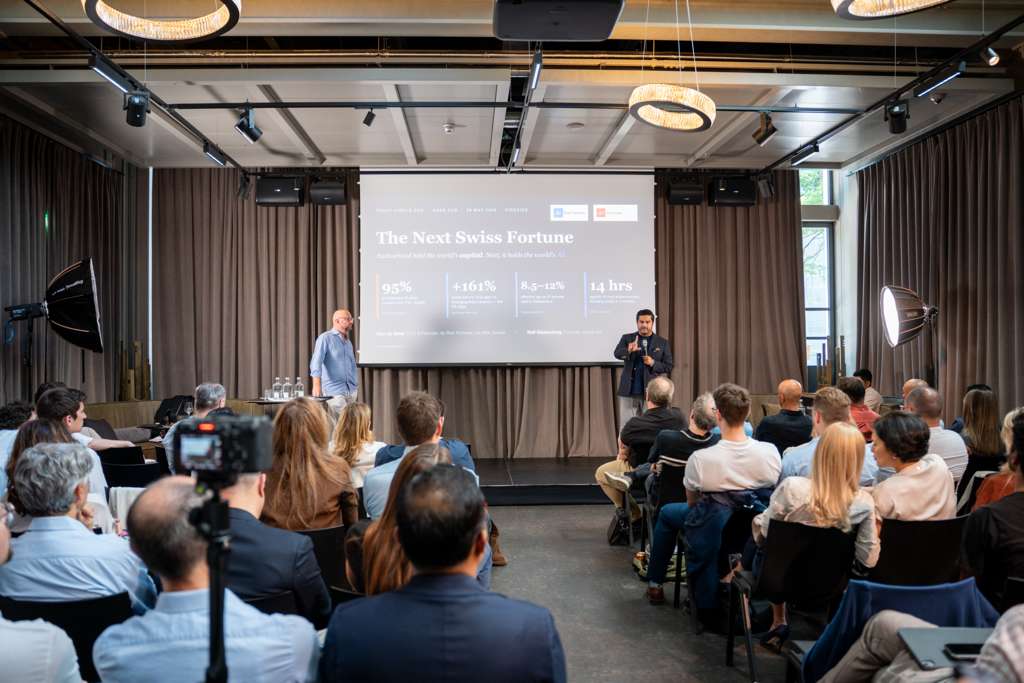
Ravi de Silva on compliance as a competitive advantage.
This Echelon conversation is relevant to BaaS because sponsor-bank access is no longer only a commercial relationship. It depends on whether the fintech has compliance built into its foundations.
Banks and fintechs that prioritize compliance from the beginning can move faster, survive regulatory scrutiny and protect growth. Those that treat compliance as a bolt-on often lose years to remediation.
Fintech infrastructure needs regulatory proof.
de Risk Partners helps fintechs rebuild the compliance, data, BSA/AML and complaints infrastructure that sponsor banks now need before they underwrite risk.
The objective is not only to pass diligence. It is to protect product continuity, customer confidence and the next stage of growth.
Fintechs that build above minimum sponsor requirements close diligence faster, negotiate from a stronger position and reduce dependency on a single charter relationship.
Questions fintech founders ask first.
Who is actually liable in a BaaS arrangement?
Legal liability generally sits with the chartered sponsor bank because it is the regulated institution. Commercial liability can fall heavily on the fintech through terminated programs, lost revenue, customer disruption, wind-down clauses, data remediation and sponsor migration costs.
What is the most common BaaS examination weakness?
A common weakness is insufficient sponsor-bank visibility into fintech customer activity. This includes customer ledger access, deposit records, BSA/AML workflows, complaints, downstream third-party relationships and the bank’s ability to act independently.
Should a fintech build a compliance program that exceeds sponsor requirements?
Yes. In 2026, diligence is increasingly sponsor-led and regulator-informed. Fintechs that can demonstrate examiner-grade compliance independent of one sponsor can move faster, negotiate better terms and survive sponsor transitions.
What should be in a sponsor-bank diligence pack?
A strong diligence pack should include the BSA/AML responsibility matrix, customer-ledger access design, complaints integration, third-party risk controls, data retention, transaction monitoring logic, SAR workflow, governance reporting and lookback readiness.
What happens if a sponsor bank cuts a fintech loose?
The fintech may need to find a replacement sponsor, migrate customer activity, preserve continuity, satisfy wind-down obligations, provide data for lookbacks and rebuild its compliance package under compressed timelines.
How does de Risk Partners support BaaS fintechs?
de Risk Partners supports diligence-pack rebuilds, sponsor-bank readiness, BSA/AML responsibility matrices, ledger-access design, complaints integration, mock examinations, lookback infrastructure and compliance operating model remediation.
Could your fintech survive a sponsor-bank transition?
Bring your last sponsor-bank diligence pack. de Risk Partners will return a Joint Statement gap analysis within five business days.