

Consent Order Remediation for US Banks: The 18–24 Month Closure Model.
Consent order remediation at a glance.
A public enforcement order creates a regulator-reviewed operating plan, not a private compliance project.
Missed milestones, weak sustainability evidence, unapproved lookback methodology and board-level uncertainty.
Most complex BSA/AML orders should be planned around an 18-to-24-month operating model.
The largest cost is often lost growth: delayed expansion, acquisitions, new products and strategic optionality.
The biggest cost of a BSA/AML consent order is rarely the fine. It is the opportunity your bank loses while regulators, counterparties and future acquirers wait to see whether the institution can actually fix itself.
On 10 October 2024, TD Bank entered into the largest BSA/AML settlement in US history, with penalties across DOJ, FinCEN and the OCC, plus an independent monitorship and required AML remediation. The headline was the dollar figure. The operational reality for every Chief Compliance Officer was the multi-year operating discipline now embedded inside the order.
A consent order is not just a regulatory document. It becomes a public signal. Every future regulator, correspondent bank, counterparty, potential acquirer, rating agency analyst and board member can read it. The civil money penalty may be painful, but the longer economic drag can be worse.
Consent order remediation for US banks is the process of converting enforcement articles into an 18-to-24-month operating model with named ownership, lookback execution, control rebuild, board evidence and regulator-ready sustainability proof.
Why a consent order is really a growth restriction.
The fine is the visible cost. The hidden cost is strategic drag. A bank under order may face delayed branch expansion, restricted product approvals, stalled acquisitions, higher diligence from counterparties, correspondent banking friction, supervisory escalation and talent attrition.
That is why proactive AML assurance is not only a compliance exercise. It is a growth-protection exercise. A bank that cannot demonstrate control over BSA/AML, transaction monitoring, SAR quality, customer due diligence, third-party risk and governance cannot credibly argue that it is ready to expand.
Fenergo’s 2024 enforcement analysis reported approximately $4.6 billion in global financial penalties, with North America accounting for 95% of total penalties. That enforcement concentration makes US bank remediation a board-level operating priority, not an annual compliance refresh.
The regulatory landscape: what US consent orders now demand.
A standard US bank consent order issued by the OCC, Federal Reserve or FDIC often contains five to nine articles, each with sub-requirements, deadlines and board-reporting expectations. The order is usually less about one broken control and more about an operating model that failed to evidence risk management over time.
Common articles in BSA/AML consent orders.
- BSA/AML program enhancements.
- Customer due diligence and enhanced due diligence.
- Transaction monitoring rules, alert handling and SAR quality.
- Compliance committee governance and board reporting.
- Third-party risk management and fintech partner oversight.
- Internal audit and independent testing.
- Staffing, training and accountability.
- Historical transaction lookbacks.
- Sustainability and validation before termination.
The lookback requirement is particularly material. Castellum.AI’s analysis found that 53% of AML-focused enforcement actions since 2023 included lookbacks, rising to 79% in cases involving BaaS sponsor banks. A typical lookback can cover 12 to 36 months of historical activity and consume a meaningful share of total remediation cost.
The Federal Reserve’s June 2024 enforcement action against Evolve Bank & Trust also reinforced that fintech program risk, AML controls, risk management and consumer compliance are no longer separate supervisory conversations. For sponsor banks and fintech-facing institutions, they are part of the same operating-risk discussion.
A de Risk engagement: seven articles, 4.2 million transactions, original-window closure.
In 2025, de Risk Partners was engaged by a US community bank operating under a formal written agreement with its primary federal regulator. The agreement contained seven articles, including a 24-month lookback covering approximately 4.2 million transactions across deposit, lending and prepaid-card portfolios.
By the time de Risk was engaged, the bank was three months into a 12-month milestone schedule and at risk of missing two of the first four deliverables. The remediation budget had expanded from $4.5 million to a forecast of $8.7 million. The law firm’s role was advisory. Internal teams were running on overtime. The audit committee had begun asking questions the management team could no longer answer.
The de Risk engagement was structured in four phases mapped directly to the consent-order articles, with each phase anchored by an examiner-facing deliverable. Phase one stabilised the programme in five weeks: a fractional Chief Risk Officer was named, the BSA/AML policy was refreshed, the third-party risk register was reconciled and the lookback methodology was aligned before high-volume execution began.
Phases two through four ran in parallel. An offshore execution layer supported the 24-month transaction review at approximately 35% of the prior US-only model cost. The transaction-monitoring tuning project was reset around typology-specific scenarios. Internal audit validation was rebuilt around the consent-order articles, not the bank’s legacy audit calendar.
The written agreement closed inside its original 18-month window. Final consent-order cost landed at approximately $6.1 million — 30% below the mid-engagement forecast.
The de Risk Consent Order Closure Roadmap.
Stabilise the order.
Confirm scope, name the operational owner, refresh key policies, reconcile third-party registers and align the regulator on lookback methodology before transaction review begins.
Re-engineer the controls.
Rebuild transaction monitoring, restructure CDD and EDD, staff the lookback team, reset SAR quality, produce early independent-testing evidence and close milestone risk.
Automate high-volume workstreams.
Where economically justified, automate alert disposition, SAR drafting support, KYC refresh, sanctions screening and repetitive evidence capture with appropriate model-risk governance.
Validate and close.
Build article-level sustainability evidence, conduct independent validation, prepare examiner exit materials and support the termination motion with proof that the remediated state is durable.
What must be proven to close a consent order.
| Examiner question | Weak remediation model | de Risk operating model |
|---|---|---|
| Who owns closure? | Legal, compliance, operations and audit each own fragments. | One operational owner with CEO-equivalent authority and board-level reporting. |
| Is the lookback defensible? | Sampling and review begin before methodology is aligned. | Lookback methodology is agreed before execution and tied to examiner expectations. |
| Are controls actually rebuilt? | Policies are rewritten, but monitoring and evidence remain weak. | CDD, EDD, transaction monitoring, SAR quality and third-party risk are rebuilt around article requirements. |
| Can the bank prove sustainability? | Evidence is collected after remediation work is completed. | Sustainability evidence is built in parallel with execution from month one. |
| Can the board govern the order? | Committee reporting follows legacy meeting structures. | Board packs are anchored to order articles, milestones, owners, deadlines and residual risk. |
Implementation steps for banks under order.
- Re-read the consent order article by article through an operational lens, not only a legal lens.
- Name one operating owner with CEO-equivalent authority for the duration of remediation.
- Re-baseline the programme against the relevant FFIEC examination manual and the institution’s current risk profile.
- Secure regulator alignment on lookback methodology before launching high-volume review.
- Stand up an execution layer for repetitive review, alert, KYC, documentation and evidence workstreams.
- Re-paper third-party arrangements against current interagency guidance and fintech-partner risk expectations.
- Issue quarterly board reports anchored to consent-order articles, not legacy committee structure.
- Prepare the termination motion with complete sustainability evidence between months 18 and 24.
Where AI and automation fit — and where they do not.
Automation can reduce the cost of high-volume remediation, especially in alert disposition, SAR drafting support, KYC refresh, sanctions screening and evidence capture. But AI-enabled remediation cannot be treated as a shortcut around governance.
Any AI-enabled component used in a consent-order environment should be validated under model-risk expectations before the regulator asks. That is where Enterprise AI governance and Compliance Reinvented become part of the remediation operating model.
Consent order closure often also requires Regulatory Remediation, Compliance Managed Services and interim leadership through a Fractional CCO or fractional risk officer model.
If your remediation plan cannot show who owns each article, what evidence proves completion and how sustainability will be validated, the clock is already against you.
The fine is not the biggest cost. Lost growth is.
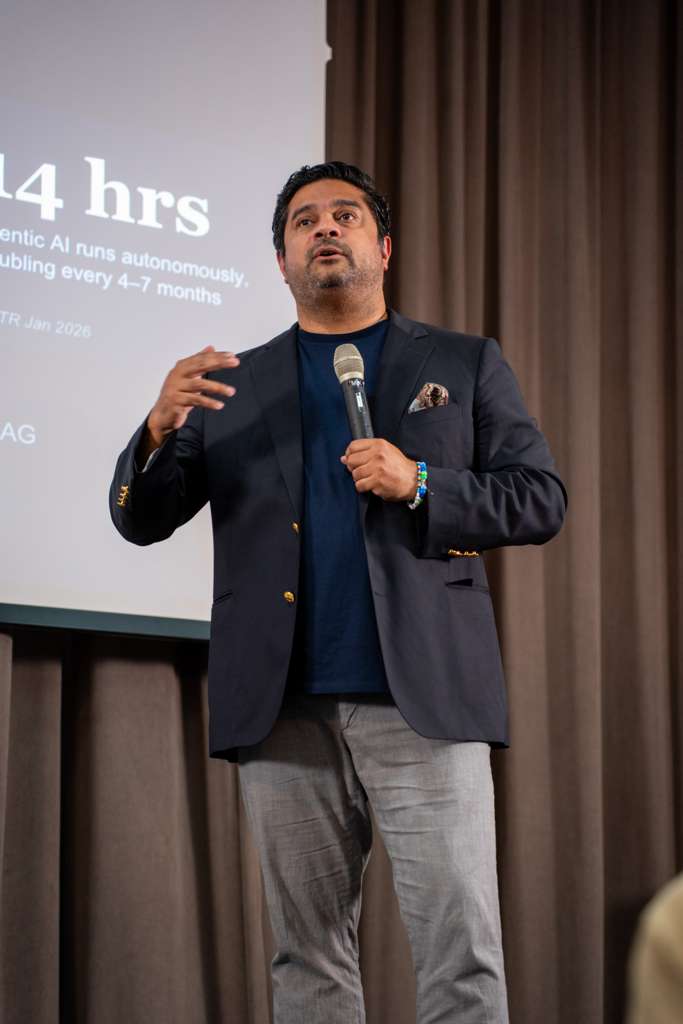
Ravi de Silva on BSA/AML enforcement risk.
The consent-order reel reinforces the core commercial point of this article: enforcement actions do not only create fines. They delay expansion, restrict products, stall acquisitions and increase supervisory scrutiny.
de Risk Partners assesses AML programmes the way regulators do — identifying control gaps before they become enforcement actions and helping banks protect both compliance standing and growth strategy.
Regulatory remediation needs visible leadership.
de Risk Partners combines former regulator and global-bank compliance experience with execution capacity across lookbacks, transaction monitoring, SAR quality, third-party risk, governance and sustainability evidence.
The result is a remediation model designed for examiner review, board oversight and closure discipline.
Questions banks under order ask first.
What is consent order remediation for a US bank?
Consent order remediation is the structured operating process a bank uses to satisfy enforcement order articles, rebuild deficient controls, complete required lookbacks, evidence sustainability and prove to regulators that the remediated state is durable.
How long does a BSA/AML consent order usually take to close?
Complex BSA/AML consent orders should generally be planned around an 18-to-24-month closure model, especially where the order includes lookbacks, transaction monitoring remediation, SAR quality, third-party risk, independent testing or sustainability periods.
What is the average cost of a US bank consent order closure?
Industry data is limited, but in de Risk engagements, total remediation cost often runs at multiples of the civil money penalty. Lookback execution can consume 15% to 30% of total cost, depending on scope, platforms, data quality and review volume.
Can a consent order be closed in 12 months?
It can be, but complex orders rarely close that quickly. Articles requiring sustainability evidence, independent validation or BSA/AML programme enhancement usually drive the back half of the timeline.
What is the most common reason consent orders are extended?
The most common reason is insufficient sustainability evidence. Examiners need proof that the corrected control environment works over time, not only that a policy, procedure or system change has been implemented.
How does de Risk Partners support consent order closure?
de Risk Partners supports article-level operating plans, remediation PMO, fractional risk and compliance leadership, lookback execution, transaction-monitoring tuning, SAR quality remediation, third-party risk repair, board reporting and sustainability evidence.

Under order, or worried you are heading there?
Send de Risk Partners your order, written agreement or latest examination findings. We will return a 30-page operating-plan equivalent within 10 business days.